.png?width=98&height=67&name=Logo%20(13).png)
.png?width=31&height=26&name=Shape%201%20(4).png)

 Vinyl Siding vs Fiber Cement vs. Engineered Wood Siding" loading="lazy">
The most expensive siding decision is the one you have to fix. When choosing between vinyl siding vs. fiber cement vs. engineered wood siding, the real difference isn’t in how they look on day one. It shows up years later, after freeze-thaw cycles, heavy rain, summer heat, and jobsite wear start testing the material.
It’s a performance decision that affects callbacks, warranties, install time, and long-term client satisfaction. Each option solves a different problem:
- Vinyl siding optimizes for speed and cost.
- Fiber cement siding prioritizes lifespan and fire resistance.
- Engineered wood siding balances natural aesthetics with easier installation.
The comparison below breaks down how vinyl siding vs. fiber cement vs. engineered wood siding actually perform in real conditions. Exploring the best siding material? Here are the best options.
Vinyl Siding vs. Fiber Cement Siding vs. Engineered Wood
Here’s a quick comparison of the three siding options to help you identify the best fit for your siding project:
|
Decision Factor |
Vinyl Siding |
Fiber Cement Siding |
Engineered Wood Siding |
|
Best For |
Budget-driven, fast-turn projects. |
Premium, long-term builds. |
Mid-range to upscale homes needing a wood look without full wood drawbacks. |
|
Cost Position |
Lowest upfront cost |
Highest upfront cost |
Mid-range costs |
|
Durability |
Good, but it can crack in extreme cold or under impact. |
Excellent. Handles moisture, temperature swings, wind, and fire. |
Very good. Strong impact resistance and stable in cold weather when installed well. |
|
Climate Fit |
Performs well overall. Watch for brittleness in severe cold. |
Outstanding in all conditions, from snow to summer storms. |
Performs well in cold areas with proper detailing. |
|
Appearance |
Clean, consistent, modern |
Premium, textured, can mimic wood or masonry |
Warm, natural wood look |
|
Maintenance |
Very low; no painting |
Low, but needs repainting every 10–15 years |
Low with factory finishes; repainting optional later |
|
Energy Efficiency |
Good. Better with insulated vinyl. |
Neutral. Depends on the wall insulation. |
Neutral. Depends on the wall insulation. |
|
Installation |
Fast and easy; lightweight |
Slower; heavy, and requires skilled crews |
Faster than fiber cement; lighter and more forgiving |
|
Fire and Rot Resistance |
Won’t rot, but can melt |
Non-combustible, rot-proof |
Treated for rot and insects; not non-combustible |
|
Customization |
Limited repainting options |
Easy to repaint and change colors |
Easy to repaint; factory finishes available |
|
Typical Use Case |
Cost-controlled subdivisions, rental rehabs |
High-end custom homes, long-term owner-occupied properties |
Suburban upgrades, remodels, and custom homes wanting wood aesthetics |
|
Key Selling Point |
Lowest cost with solid performance |
Maximum lifespan and premium perception |
Best balance of beauty, performance, and install ease |
|
Trade-Off |
Less impact resistance, limited color changes |
Higher material and labor cost |
Needs proper installation. Not fireproof. |
The next sections present a deep dive into each siding option to make your decision-making easier.
What Is Vinyl Siding?
Vinyl siding is a low-maintenance exterior solution that prioritizes affordability. It’s nothing but PVC plastic in various colors and styles, some of which mimic wood grain.
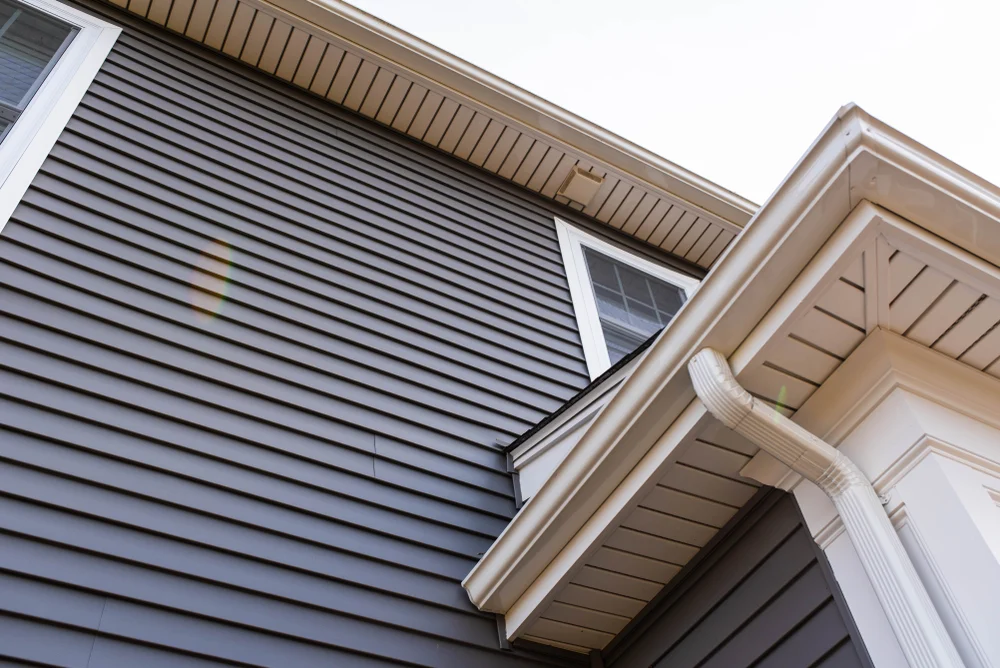
It's easy to install and cost-effective for large projects. Homeowners don’t need to paint or stain it. Just an occasional hose-down, and it keeps looking fresh. In newer products, features such as impact resistance and moisture repellence are present.
What to Look Out for When Considering Vinyl Siding:
In cold winters, extremely low temperatures make vinyl brittle. A hard impact might crack a panel. It’s also not the best insulator on its own. Standard vinyl has a relatively low R-value (about 0.6), so you may want to pair it with an insulated backing or house wrap for better energy efficiency.
R-values rate how well building insulation prevents the flow of heat into and out of the home. Higher ratings indicate greater insulation performance.
How Long Does Vinyl Siding Last?
In terms of longevity, you can expect vinyl siding to last around 20 to 30 years. If the climate is gentle, 40 years is also possible. However, under prolonged UV exposure, the vinyl color fades over the years. Repainting is possible, but it’s not as straightforward as repainting fiber cement or wood.
What Is Fiber Cement Siding?
Fiber cement siding is known for its durability. It’s made from a mix of cement, sand, and cellulose fibers. This material closely resembles painted wood but lasts for decades longer.
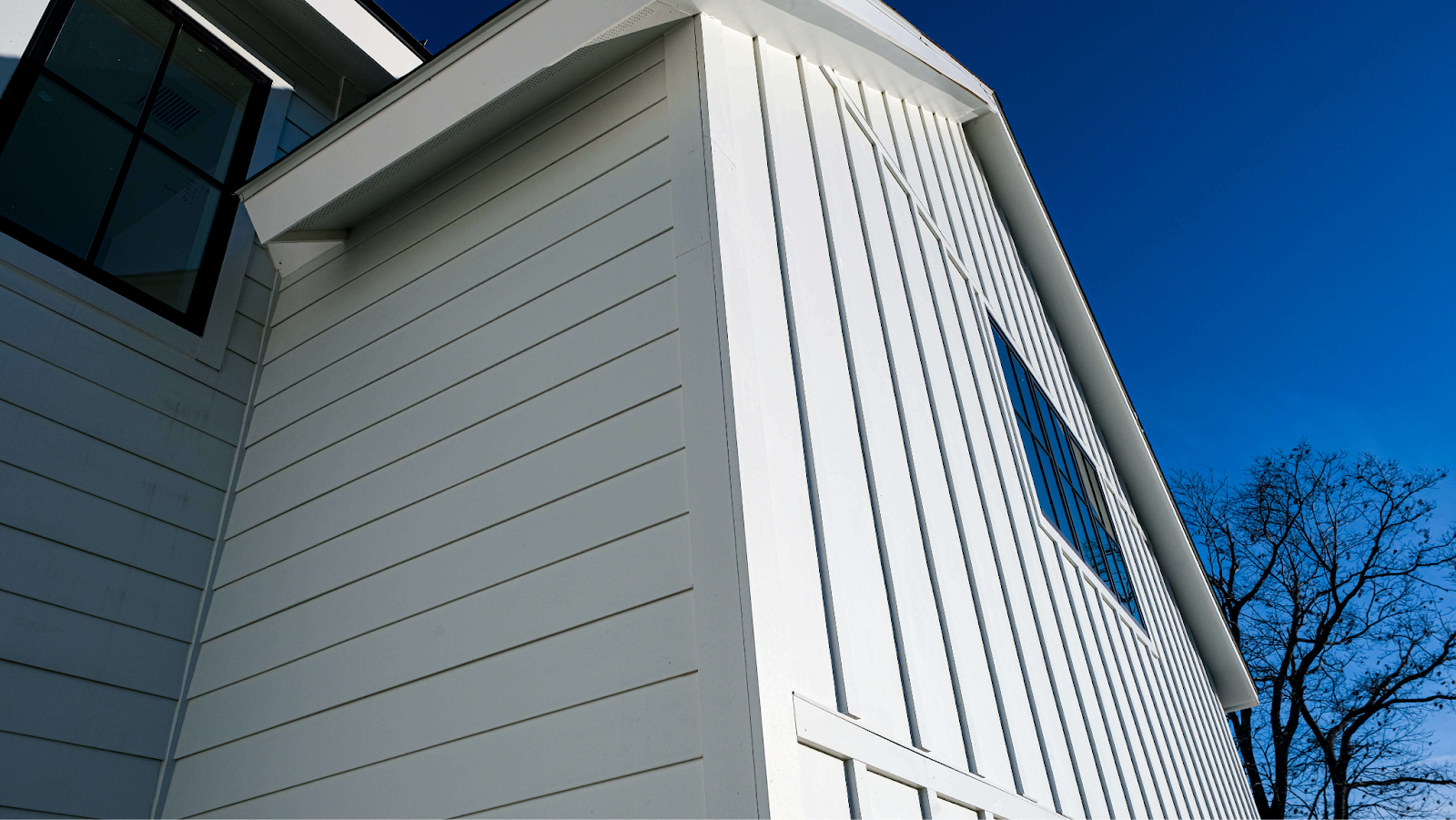
Contractors prefer it for robustness and longevity. From a fire safety perspective, fiber cement is noncombustible, which is a major advantage. As seasonal changes come and go, they don’t affect fiber cement much with temperature swings. It stays dimensionally stable without cracking. The material handles moisture and humidity without rotting or becoming a termite's favorite.
Some of them imitate wood grain, shingles, and even stone, allowing homeowners to achieve a high-end look.
What to Look Out For When Considering Fiber Cement:
Below are a few things you need to consider to make an informed choice.
- Weight: Fiber boards are substantially heavier than vinyl or engineered wood of comparable size. This makes installation more labor-intensive and dependent on professional crews and specialized tools.
- Prone to chips and cracks if dropped: When fiber cement is dropped on its edges, it is more likely to crack. You need to handle it with care.
- High upfront investment: Costs more than vinyl siding or engineered board. But builders and owners see it as a long-term investment.
How Long Does Fiber Cement Last?
It's a low-maintenance product that doesn’t require frequent care. It needs repainting every 10 to 15 years to keep it looking its best. With periodic maintenance, fiber cement can easily last 30 to 50 years or more on a home.
Although it comes with a higher upfront cost, owners see it as a long-term investment in durability.
What Is Engineered Wood Siding?
Engineered wood siding offers the warm, natural look of wood without the same level of upkeep. It’s made from wood fibers and strands bonded with resin and treated for durability.
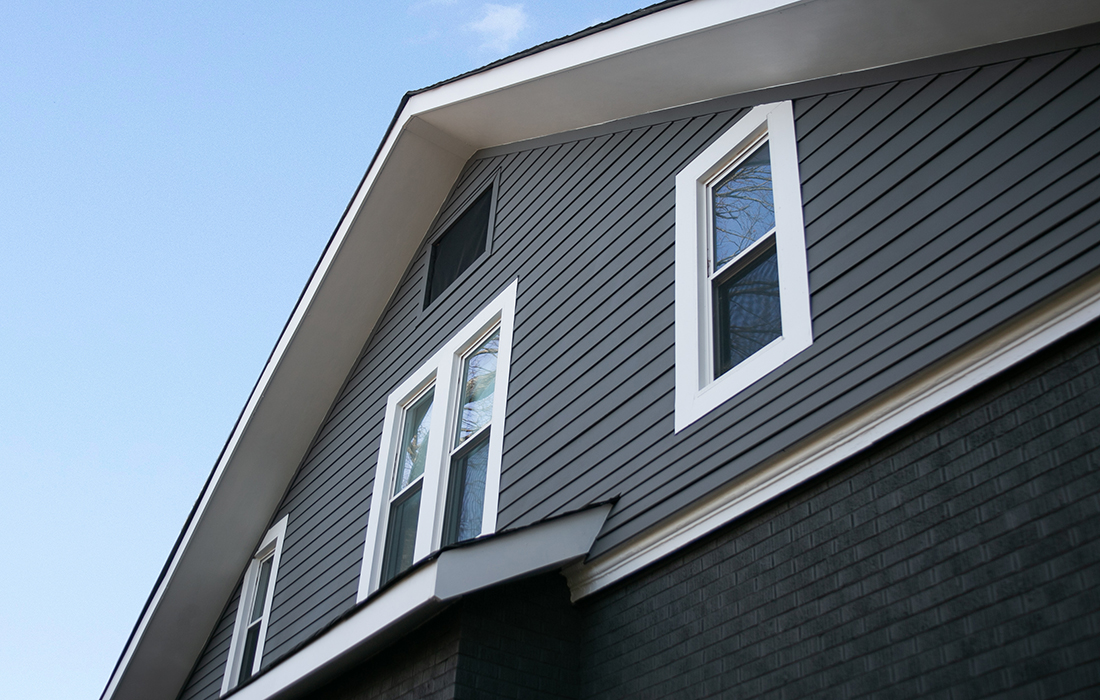
It’s sometimes called composite wood siding. Essentially, engineered wood uses wood fibers, sawdust, or strands, combined with binders and additives, to create siding boards that look like solid wood. It gives you an authentic cedar-like appearance with improved resistance to rot, insects, and warping.
It weighs less than fiber cement and is easier to cut, which speeds installation and reduces labor costs. Given the impact of moisture and pets on wood, these products are infused with zinc borate to deter termites and fungal growth. Engineered wood won’t rot like untreated wood. It is more flexible and impact-resistant than fiber cement. However, since it is still a wood-based product, moisture is its main enemy.
What to Look Out for When Choosing Engineering Wood Siding:
Below are a few things to consider when making an informed choice about engineered wood siding.
- Maintenance: Engineered wood usually needs more upkeep than fiber cement or vinyl over time. This includes periodic repainting or touch-ups. Homeowners should be advised that, to achieve a 25+ year lifespan, they can’t ignore the siding after installation.
- Higher initial cost than vinyl: Purely in terms of purchase price, engineered wood siding tends to cost more than vinyl siding. For projects on a razor-thin budget, vinyl might still win out.
- Not fireproof: Because it contains real wood, this siding is combustible. It will typically have fire ratings similar to or slightly better than natural wood siding due to the treatment, but it does not offer the fire resistance of fiber cement. In areas where fire codes or wildfire risks are a concern, this could be a factor.
How Long Does Engineered Wood Siding Last?
Manufacturers often provide these products either pre-primed or with a factory finish. At times, they come with a no-fade guarantee. In terms of lifespan, engineered wood siding lasts a long time, often 20 to 30 years, and sometimes beyond with excellent maintenance.
Some brands even offer 50-year limited warranties on the substrate, for example, LP SmartSide, indicating confidence in the material’s durability. It falls between vinyl and fiber cement in longevity.
From a cost perspective, engineered wood usually falls in the middle. It’s more expensive than vinyl but less expensive than fiber cement in many cases.
Vinyl vs. Fiber Cement vs. Engineered Wood: Which Is The Best Choice?
The best choice depends on what matters the most in your project. Here’s a quick recap to guide your decision:
- Choose vinyl siding if you need an affordable solution in a project where speed of completion is a priority. You need decent durability and a clean look. Modern vinyl options with insulated backing give more energy efficiency and rigidity. Overall, it’s a good choice when you want to keep costs down and still look good.
- Choose fiber cement siding if your priority is maximum durability and a premium look. It’s preferred in high-end projects where people want the siding to last a lifetime. It can handle extreme weather well. Additionally, if fire resistance is a concern or selling point, fiber cement siding is an undisputed choice. The only trade-off is high cost and skilled installation. If there’s budget and time, it's the go-to choice to increase a property’s value.
- Choose engineered wood siding if you can’t justify the cost of fiber cement siding and want to complete the job faster. With engineered wood siding, you get the ability to handle cold and impact well, as long as it’s of decent quality and properly installed. You get to give a long-term paint guarantee, making maintenance nearly as low as fiber cement. The trade-off is its combustible nature. Go with vinyl siding instead, where fire codes or wildfire risks are a concern.
Frequently Asked Questions
Which Siding Handles Hail and Impact Better?
Engineered wood and insulated vinyl generally outperform standard vinyl and even fiber cement when it comes to impact. Fiber cement is strong, but it can chip or crack if hit hard. Engineered wood has more give, so it tends to absorb impact better. Insulated vinyl adds rigidity and can reduce cracking in moderate hail.
Which Siding is Easiest to Repair If a Panel Gets Damaged?
Vinyl is the easiest and cheapest to repair. Individual panels can often be unlocked and replaced without disturbing large sections. Engineered wood repairs are straightforward but may require repainting for a color match. Fiber cement repairs are more labor-intensive and often require repainting to blend.
How Do These Sidings Compare for Noise and Vibration?
Insulated vinyl and engineered wood dampen sound better than standard vinyl or fiber cement. Fiber cement is rigid and can transmit impact noise. In windy areas, properly installed insulated vinyl tends to be the quietest.
Which Siding Is Most Forgiving of Installer Error?
Vinyl and engineered wood are more forgiving. They are lighter, easier to cut, and allow more tolerance in fastening. Fiber cement demands precise spacing, flashing, and fastening. Small mistakes can lead to cracked boards, water intrusion, or visible alignment issues.
.jpg)
.png)