.png?width=98&height=67&name=Logo%20(13).png)
.png?width=31&height=26&name=Shape%201%20(4).png)

-3.jpg) 3-Tab Shingles vs. Architectural Shingles: What’s The Difference?" loading="lazy">
3-Tab Shingles vs. Architectural Shingles: What’s The Difference?" loading="lazy">
Pick the wrong shingle, and you don’t just risk a higher bill. You risk early wear and a roof that doesn’t age as your customer expected.
On paper, asphalt shingles such as 3-tab and architectural shingles meet code. In real applications, they behave differently once the wind picks up and a few seasons pass. Such differences appear in durability and how the roof looks from the street.
This article compares 3-tab shingles vs. architectural shingles in detail. Here’s an overview of what comes next:
- 3-tab shingles vs. architectural shingles: At a glance
- What are 3-tab shingles?
- What are architectural shingles?
- 3-tab shingles vs. architectural shingles: How to make the right choice
Go through the FAQs in each section to pick the best roofing material among the two options here.
3-Tab Shingles Vs. Architectural Shingles
Below is a quick comparison of 3-tab and architectural shingles. Take a look and dive deeper in the next section.
|
Factor |
3-Tab Asphalt Shingles |
Architectural Shingles |
|
Appearance |
Flat, uniform look with repeating tabs. Simple and basic. |
Layered, textured look with depth. Resembles wood or slate. |
|
Thickness and Weight |
Thin, single-layer. Light and easy to handle. |
Thicker, multi-layer. Heavier and more solid. |
|
Wind Resistance |
More prone to curling and wind damage. |
Built to last longer. Offers much better storm resistance. |
|
Initial upfront cost |
Less, it’s more cost-effective |
High |
|
Installation |
It has lightweight bundles and is comparatively easier to install. |
Heavier to handle. Pattern is more forgiving on complex roofs. |
|
Maintenance |
More frequent repairs over time. |
Fewer repairs due to a stronger build. |
|
Curb Appeal |
Has a basic, flat look with limited style options. |
It’s rich, dimensional look. It offer wide color and style range. |
|
Best Use |
Budget projects, sheds, short-term roofs, and repairs. |
New homes, re-roofs, high-wind areas, long-term value. |
What Are 3-Tab Shingles?
3-tab shingles are the classic, entry-level asphalt shingles used on roofs for decades.
They get their name from the design. Each shingle strip is cut into three evenly sized tabs or sections. When installed, these create a repeating pattern of flat, rectangular asphalt tabs across the roof. The image below would give more clarity.
It’s a simple design with a clean, traditional look that many older homes have.
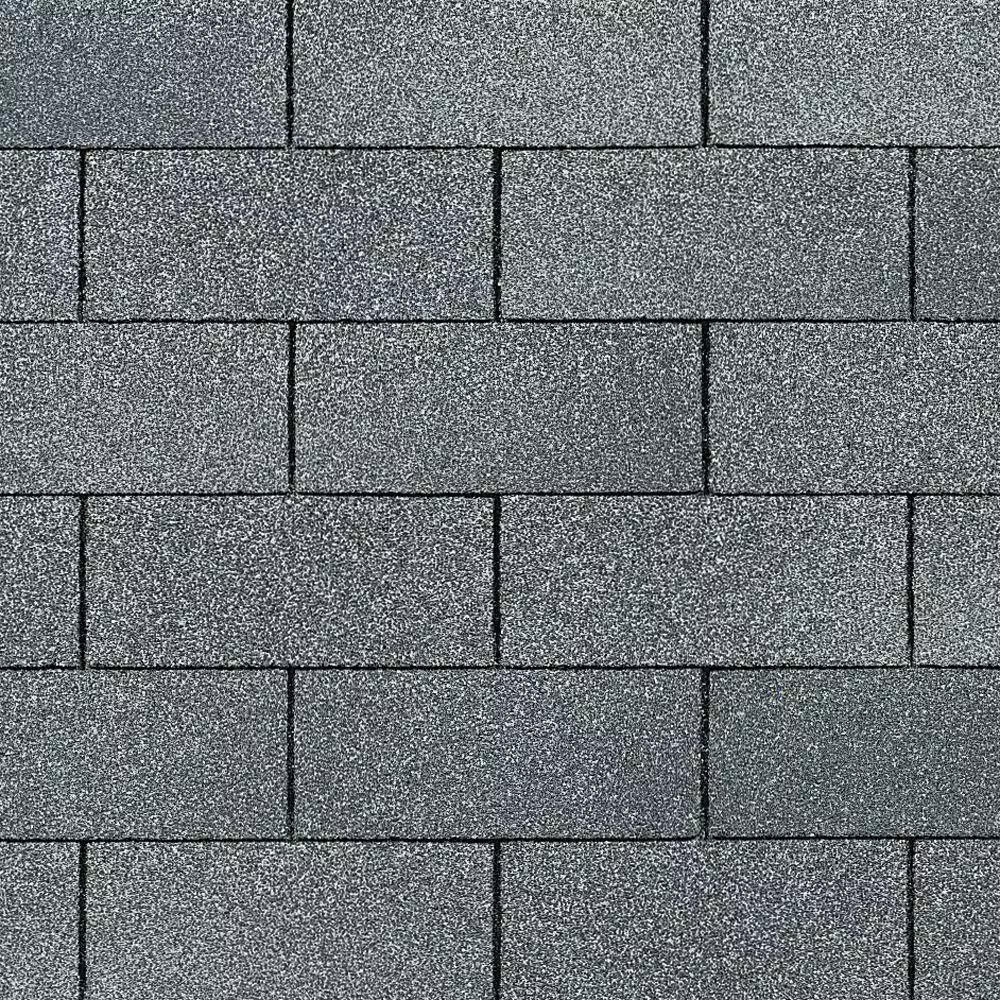
Since these are thin and lightweight, they’re easier to install. They’re made of a single layer of asphalt-soaked fiberglass mat with mineral granules on top for color and UV protection.
What to Look Out For:
Here’s what you need to consider before picking 3-tab:
- Impact of weather: In severe-weather regions, 3-tab shingles may wear out sooner, lasting only 7-10 years.
- Impact of wind: If not properly ventilated, high winds catch under the tabs and lift or tear them off. Additionally, they have a lower impact resistance. Standard 3-tab shingles often carry Class A or D ratings, typically 60-90 mph under normal installation patterns.
- Needs repair: They tend to require more repairs.
There are drawbacks, but the upfront cost remains much cheaper than architectural shingles, making 3-tab a preferred choice in some cases. They keep the water out and look uniform, while making a trade-off between longevity and durability.
Top Questions About 3-Tab Shingles
Here’s what people are mostly curious about when they’re exploring roofing options:
1. How Long Can 3-Tab Shingles Last?
According to the InterNACHI’s Standard Estimated Life Expectancy Chart for Homes, 3-tab shingles last up to 20 years.
2. Are 3-Tab Shingles Discontinued?
They aren’t discontinued. It depends on the supplier and the region you’re in. Most service providers keep 3-tab shingles and perform repairs and maintenance on them. In new projects, many are moving toward architectural shingles for greater longevity and durability. This doesn’t mean the traditional 3-tab shingles are discontinued.
If you need assistance with asphalt roofing work, contact LS Building Products for a detailed analysis of your issue and its solution.
3. When do 3-Tab Shingles Need Replacement?
When you see dark spots from granule loss or blistering due to poor ventilation, or circular indentations from hail damage, check for brittleness. If shingles start cracking instead of bending, it might be the best time to replace them.
Additionally, check for persistent moss growth or cracked sealant around the chimney. This further suggests the end of a roof’s lifespan.
What Are Architectural Shingles?
Architectural shingles, also known as dimensional or laminated shingles, are an upgraded type of asphalt shingle that addresses many of the limitations of 3-tab shingles.
Unlike the flat 3-tab design, architectural shingles are made with multiple layers of asphalt fused together. It creates a thicker, 3-dimensional appearance. Instead of three uniform tabs, architectural shingles have tabs of varying widths and shapes. This random tab design gives the roof a textured, layered look with depth and shadows. They resemble more expensive roofing with wooden shake shingles or slate tile. It adds a rich and dimensional character to your roof.
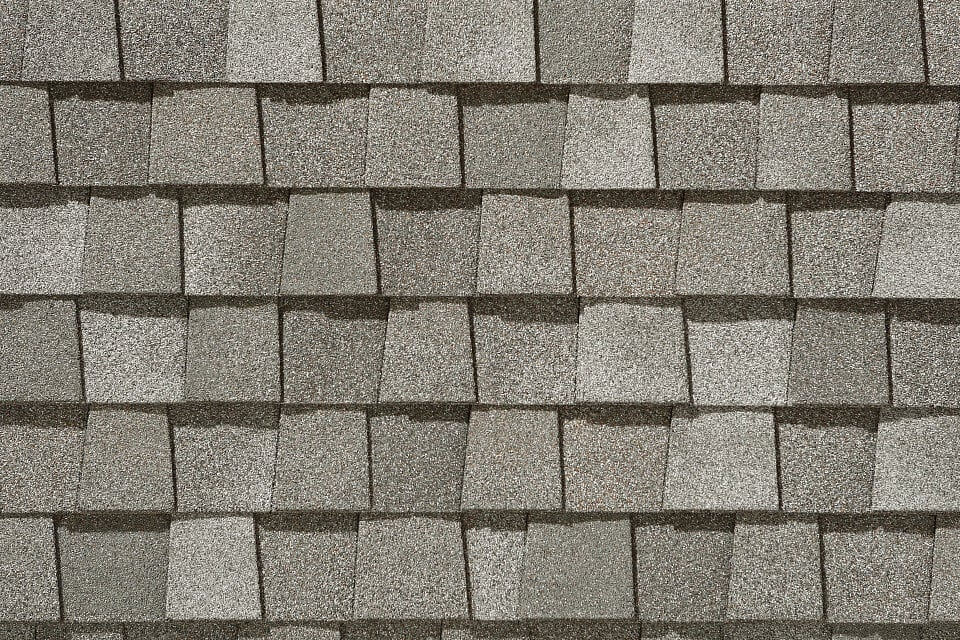
From a building materials perspective, architectural shingles use more asphalt and often better quality materials. They come with a heavier fiberglass mat base, thicker asphalt coatings, and more mineral granules on the surface. It adds to greater strength and longevity, lasting 30 years. Some are rated for 40- or 50-year service life.
What to Look Out For:
Here’s what you need to consider before picking 3-tab:
- Initial prices are quite steep. It costs roughly $4-$8 per sq. ft., depending on the region.
- These shingles are a bit bulkier and more complex to install.
If you have a decent budget and want shingles that last longer, architectural shingles would be a good choice. They’re durable against wind and harsh weather. For example, Landmark® Pro by CertainTeed resists wind speeds up to 130 mph and provides excellent resistance to algae, UV rays, and impact damage.
Top Questions About Architectural Shingles
Here’s what comes to mind when people consider architectural shingles:
1. Are Architectural Shingles Waterproof?
Yes. Architectural shingles are waterproof in the same way as 3-Tab shingles are. Both are made of asphalt and fiberglass, making them moisture-resistant.
2. Can You Mix 3-Tab and Architectural Shingles?
You can mix 3-tab and architectural shingles, but it’s a bad idea unless it's a short-term repair. Mixing them isn’t recommended as it would lead to style and alignment clashes.
3. How Many Layers of Architectural Shingles Can You Have?
Most regions allow for 2 layers max. If you have one layer at present, but it’s curling, cracked, or has an underlying structural issue, layering new shingles on top won’t solve the problem.
3-Tab Shingles Vs. Architectural Shingles: How to Make the Right Choice
Both 3-tab and architectural shingles will shed water and protect your building, but your priorities determine which is the better fit.
- Budget: If your budget is extremely tight or you’re dealing with a low-value property, 3-tab shingles might be the pragmatic choice. For a long-term home or business facility, it makes more sense to use architectural shingles, given the total cost of ownership.
- Longevity: How long do you need the roof to last? If you’re hoping for 25+ years of service or want a product with a strong warranty, architectural shingles are the way to go. If it’s a short-term solution, 3-tabs could suffice.
- Climate and weather: In areas prone to high winds, hurricanes, hail, heavy snowfall, or intense sun, architectural shingles provide crucial extra protection. Conversely, in a mild climate, 3-tabs can last closer to their maximum lifespan and might be adequate if other factors align.
- Aesthetics: If the roof's look matters to you or your clients, architectural shingles win hands down with their dimensional appearance. If the roof’s appearance is not a priority (say, on a barn or an unseen back building), 3-tab’s simpler look might be acceptable.
- Home or property value: Upgrading to architectural shingles adds value to the property. It’s an investment many buyers appreciate. On the other hand, for a rental or low-value property that you don’t intend to sell soon, you might prioritize cost savings now over future sale appeal, making 3-tabs a reasonable pick.
- Future Plans: Think about whether you might add solar panels or do other roof work in the future. Architectural shingles are more durable under equipment such as solar racks, and because they last longer, they pair well with long-term investments like solar. If a 3-tab roof is torn off sooner, that could complicate such additions.
If in doubt, consult with a trusted local roofing professional about your specific situation.
It’s best to get estimates for both options, see samples, and then decide.
Frequently Asked Questions
Here are a few questions people frequently ask when comparing the two asphalt roofing options:
1. Which Option Lowers Lifetime Maintenance Cost?
Architectural shingles usually cost more upfront but reduce long-term repair frequency, storm damage claims, and premature replacement cycles. Over 25–30 years, they often deliver a lower total cost of ownership despite the higher initial material price.
2. Which Shingles Are Easier to Match for Future Repairs?
3-tab shingles are easier to color-match years later due to their uniform pattern. Architectural shingles may require full-bundle blending to avoid visible patching because of their random dimensional design.
3. How do Warranties Differ In Real-World Coverage?
Architectural shingles often include longer non-prorated periods and higher wind warranties when installed with manufacturer-approved starter strips and underlayment. Many 3-tab warranties downgrade quickly after the first few years.
4. Are Architectural Shingles Heavier on Roof Structures?
They are heavier, but most modern roof decks are engineered to handle them without reinforcement. On older structures or re-roof projects with multiple existing layers, a structural load check is still recommended.
5. Do Architectural Shingles Reduce Roof Noise During Heavy Rain or Hail?
Yes. Their thicker, multi-layer construction damps sound better than single-layer 3-tab shingles. This can noticeably reduce rain and hail noise inside residential and light-commercial buildings.
6. How Do 3-Tab Shingles Perform on Low-Slope Roofs?
They are more sensitive to slope limitations. On pitches near the minimum allowed (typically 2:12 to 4:12 with underlayment upgrades), architectural shingles seal better and resist wind-driven rain more effectively than 3-tab products.
-2.jpg)